A Century of Flight, Told in 100 Objects
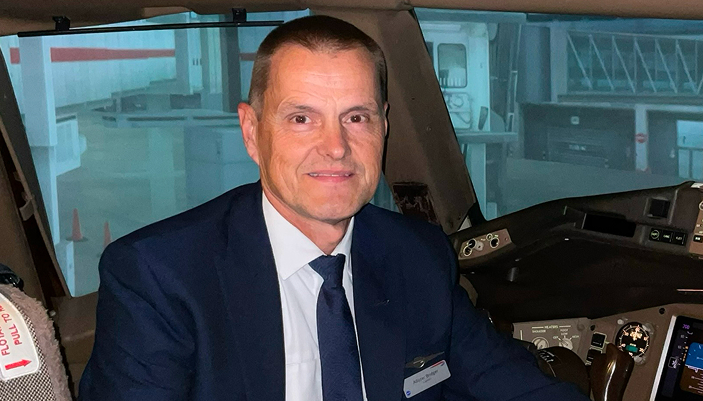
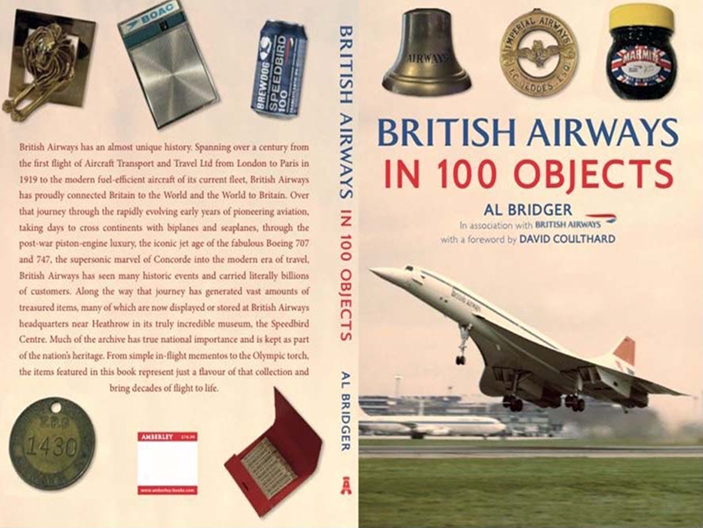
From Concorde's nose cone to a matchbook, Captain Al Bridger has distilled more than a hundred years of British Airways history into a single collection. He talks to Elevate about the stories objects keep, and the people who made them. British Airways in 100 Objects by Al Bridger
There are few people better placed to tell the story of British Airways than a man who has flown its aircraft, led its pilots and sat in its boardroom. Captain Al Bridger left school with a single dream, to fly, and went on to pilot RAF fast jets before moving to the flight deck of the 747 and the 777. Along the way he served as Chief Pilot and as a Director of the airline. Now, in his second book for Amberley, British Airways in 100 Objects, he tells the story of a century of flying not through the aircraft themselves, but through the objects they left behind.
His first book, Flavour of Flight, told the airline's story through food. This time the lens is different, and, he says, the idea took hold almost the moment it was suggested.
In the Speedbird Centre I'm surrounded by fascinating items steeped in British Airways history.
“The initial spark came from a discussion with Amberley, the wonderful publishers,” he explains. “Once that fire was lit, the object selection and writing flowed easily from there.” He is speaking from the Speedbird Heritage Centre, the airline's own archive, which holds thousands of items spanning more than a century of flying. Narrowing that vast collection to just one hundred was, by his own admission, no small task.
“This could comfortably have been British Airways History in 1000 Objects, the choice is so immense,” he says. “Some items simply had to be included, such as Concorde's nose cone and the Royal items. Others gave a great opportunity to highlight an important part of the history, and some I just love from the collection.”
His first book, Flavour of Flight, told the airline's story through food. This time the lens is different, and, he says, the idea took hold almost the moment it was suggested.
In the Speedbird Centre I'm surrounded by fascinating items steeped in British Airways history.
“The initial spark came from a discussion with Amberley, the wonderful publishers,” he explains. “Once that fire was lit, the object selection and writing flowed easily from there.” He is speaking from the Speedbird Heritage Centre, the airline's own archive, which holds thousands of items spanning more than a century of flying. Narrowing that vast collection to just one hundred was, by his own admission, no small task.
“This could comfortably have been British Airways History in 1000 Objects, the choice is so immense,” he says. “Some items simply had to be included, such as Concorde's nose cone and the Royal items. Others gave a great opportunity to highlight an important part of the history, and some I just love from the collection.”
The stories objects keep
For a man who has lived and breathed the airline for decades, it takes something special to cause surprise. One figure from the archive did exactly that. “It stunned me how Captain O P Jones appeared so much in the Imperial Airways and early BOAC history,” Bridger says. “He was a real star of his time, inspiring millions of Junior Jet Club members fascinated by flying and aviation. He had a remarkable beard too.”
The collection runs from the grandest of national treasures to the most modest of mementos, and it is often the smaller items that move him most. Asked for a personal favourite, he does not reach for Concorde or the Olympic torch, but for a simple piece of paper.
The aircraft flying so low that so many towns and landmarks were readily identifiable.
“A modest object I love is the early Imperial Airways route map,” he says. “Such a simple concept, allowing the passengers to follow the route, looking at the vistas from the windows with the aircraft flying so low that so many towns and landmarks were readily identifiable. The concept is still popular today with the onboard moving map on the amazing inflight entertainment.”
It is a theme he returns to again and again: that the value of the archive lies not in the objects alone, but in what they connect us to. The Speedbird Heritage Centre itself, he says, is a treasure trove that few outside the airline have heard of. “From tiny items such as a BEA book of matches to the incredible paper dress, all of which are super and tell their own story. But what makes the Centre really special is the fantastic volunteers, whose knowledge and passion bring the whole experience to a different level. A visit is time so well spent, and I love it.”
For a man who has lived and breathed the airline for decades, it takes something special to cause surprise. One figure from the archive did exactly that. “It stunned me how Captain O P Jones appeared so much in the Imperial Airways and early BOAC history,” Bridger says. “He was a real star of his time, inspiring millions of Junior Jet Club members fascinated by flying and aviation. He had a remarkable beard too.”
The collection runs from the grandest of national treasures to the most modest of mementos, and it is often the smaller items that move him most. Asked for a personal favourite, he does not reach for Concorde or the Olympic torch, but for a simple piece of paper.
The aircraft flying so low that so many towns and landmarks were readily identifiable.
“A modest object I love is the early Imperial Airways route map,” he says. “Such a simple concept, allowing the passengers to follow the route, looking at the vistas from the windows with the aircraft flying so low that so many towns and landmarks were readily identifiable. The concept is still popular today with the onboard moving map on the amazing inflight entertainment.”
It is a theme he returns to again and again: that the value of the archive lies not in the objects alone, but in what they connect us to. The Speedbird Heritage Centre itself, he says, is a treasure trove that few outside the airline have heard of. “From tiny items such as a BEA book of matches to the incredible paper dress, all of which are super and tell their own story. But what makes the Centre really special is the fantastic volunteers, whose knowledge and passion bring the whole experience to a different level. A visit is time so well spent, and I love it.”
From open cockpits to supersonic flight
Seeing the airline from the boardroom as well as the flight deck, he says, gave him a fuller appreciation of how many hands it takes to keep an airline flying. “It has given me a true appreciation of how the airline needs everyone across the business working as a team to make the complex operations work,” he says, noting that the book deliberately features objects from roles right across the airline, from CEOs and beyond.
And then there is Concorde, which claims a chapter of this book as she claims a chapter of the nation's heart. Bridger never flew her, though he has flown supersonic many times in fast jets, “just not in such luxury.” His admiration is undimmed. “Concorde is a design masterpiece that can only be admired. She defined an era that is sadly missed.”
The writer's craft
The foreword to British Airways in 100 Objects comes from an unexpected source, the Formula 1 driver and broadcaster David Coulthard. The connection, it turns out, goes back more than thirty years. “I first met David when he flew with me in a Hawk fast jet, a trip that was my last in the RAF,” Bridger recalls. “We instantly connected through a love of speed, technology and travel, and have stayed friends ever since. As he says, we both take less risks these days.” A broadcaster who still loves aviation, Coulthard was, in Bridger's words, a natural choice.
Moving from the precision of the cockpit to the blank page might seem a leap, but Bridger finds the two worlds share more than they divide. “As pilots we follow precise standard procedures as part of a team
Seeing the airline from the boardroom as well as the flight deck, he says, gave him a fuller appreciation of how many hands it takes to keep an airline flying. “It has given me a true appreciation of how the airline needs everyone across the business working as a team to make the complex operations work,” he says, noting that the book deliberately features objects from roles right across the airline, from CEOs and beyond.
And then there is Concorde, which claims a chapter of this book as she claims a chapter of the nation's heart. Bridger never flew her, though he has flown supersonic many times in fast jets, “just not in such luxury.” His admiration is undimmed. “Concorde is a design masterpiece that can only be admired. She defined an era that is sadly missed.”
The writer's craft
The foreword to British Airways in 100 Objects comes from an unexpected source, the Formula 1 driver and broadcaster David Coulthard. The connection, it turns out, goes back more than thirty years. “I first met David when he flew with me in a Hawk fast jet, a trip that was my last in the RAF,” Bridger recalls. “We instantly connected through a love of speed, technology and travel, and have stayed friends ever since. As he says, we both take less risks these days.” A broadcaster who still loves aviation, Coulthard was, in Bridger's words, a natural choice.
Moving from the precision of the cockpit to the blank page might seem a leap, but Bridger finds the two worlds share more than they divide. “As pilots we follow precise standard procedures as part of a team
that drive safety, but we often face different scenarios that require thought and initiative,” he says. “The thing that most helps writing, as with flying, is a real passion and love of the subject.” If the first book taught him anything, he adds with a smile, it was a practical lesson: “When the publisher gives you a word count, don't exceed it. It just makes editing down difficult.”
Above all, he is clear about where the real history lives. “It's the people that make the history, and including as much of their memories as possible is vital,” he says. “The objects will last much longer than the people, so I can't thank everyone enough for sharing their stories. British Airways and its predecessor airlines have employed so many simply incredible people over time, and it was a joy to speak with them all.”
A treasured 101st
If he could add one more object to the collection, drawn from his own flying career, he knows exactly what it would be. “The Boeing 747 was very close to my heart, and I was so fortunate to have been gifted a control wheel from one of our aircraft when they retired,” he says. “The engineers mounted it beautifully on a wooden plinth with a turned brass support. It proudly sits on my desk at home and is treasured. The perfect 101st object.” You can purchase British Airways in 100 Objects
And is there a third book in him? There is, and it is already half written. “The next is the history of cocktails and beverages of British Airways and its predecessors,” he reveals. “Another wonderful subject, rich with images and, naturally, recipes for those timeless cocktails.” He extends a warm invitation to readers: anyone with a cocktail they would love to see included, or ideas for future books, is encouraged to get in touch. ba.1.museum@ba.com
Above all, he is clear about where the real history lives. “It's the people that make the history, and including as much of their memories as possible is vital,” he says. “The objects will last much longer than the people, so I can't thank everyone enough for sharing their stories. British Airways and its predecessor airlines have employed so many simply incredible people over time, and it was a joy to speak with them all.”
A treasured 101st
If he could add one more object to the collection, drawn from his own flying career, he knows exactly what it would be. “The Boeing 747 was very close to my heart, and I was so fortunate to have been gifted a control wheel from one of our aircraft when they retired,” he says. “The engineers mounted it beautifully on a wooden plinth with a turned brass support. It proudly sits on my desk at home and is treasured. The perfect 101st object.” You can purchase British Airways in 100 Objects
And is there a third book in him? There is, and it is already half written. “The next is the history of cocktails and beverages of British Airways and its predecessors,” he reveals. “Another wonderful subject, rich with images and, naturally, recipes for those timeless cocktails.” He extends a warm invitation to readers: anyone with a cocktail they would love to see included, or ideas for future books, is encouraged to get in touch. ba.1.museum@ba.com

Features