The 20-Minute Morning That Completely Rewired My Energy Levels

I am not a morning person. This is not a personality quirk I am working to correct. My circadian rhythm runs late by disposition, and no amount of aspirational content about 5am routines has ever changed that. What I have found, over a period of sustained experimentation and a lot of abandoned habits, is that it is not about the hour. It is about the first twenty minutes of whatever hour you actually get up.
The research on morning routines is both extensive and largely underused. What sleep scientists and chronobiologists agree on is that the first thirty minutes after waking represent the window in which the body's natural cortisol peak either works with you or against you. Cortisol, often framed as a stress hormone, is in fact the body's primary alerting chemical. It peaks naturally about twenty to thirty minutes after waking, a phenomenon researchers call the cortisol awakening response, and this is the moment when your biology is most primed for alertness and focus. Most people, by reaching for their phone immediately, hand that window over to other people's priorities.
The cortisol peak either works with you or against you. Most people hand it straight to their phone.
The research on morning routines is both extensive and largely underused. What sleep scientists and chronobiologists agree on is that the first thirty minutes after waking represent the window in which the body's natural cortisol peak either works with you or against you. Cortisol, often framed as a stress hormone, is in fact the body's primary alerting chemical. It peaks naturally about twenty to thirty minutes after waking, a phenomenon researchers call the cortisol awakening response, and this is the moment when your biology is most primed for alertness and focus. Most people, by reaching for their phone immediately, hand that window over to other people's priorities.
The cortisol peak either works with you or against you. Most people hand it straight to their phone.
The alternative does not require a cold shower, a gratitude journal, or twenty minutes of meditation, though none of those things are without merit. What it requires is light, movement, and water, in roughly that order, within the first quarter hour of being awake.
Natural light, even on an overcast British morning, has a measurably different effect from artificial light on the suprachiasmatic nucleus, the small region of the brain's hypothalamus that functions as the body's master circadian clock. This structure receives direct input from light-sensitive retinal cells and uses that signal to synchronise the rest of the body's biological rhythms. Standing by a window for five minutes while drinking a glass of water is enough to begin anchoring your circadian clock to the actual day. This sounds minimal because it is. It works because the bar for circadian anchoring is genuinely low.
Natural light, even on an overcast British morning, has a measurably different effect from artificial light on the suprachiasmatic nucleus, the small region of the brain's hypothalamus that functions as the body's master circadian clock. This structure receives direct input from light-sensitive retinal cells and uses that signal to synchronise the rest of the body's biological rhythms. Standing by a window for five minutes while drinking a glass of water is enough to begin anchoring your circadian clock to the actual day. This sounds minimal because it is. It works because the bar for circadian anchoring is genuinely low.
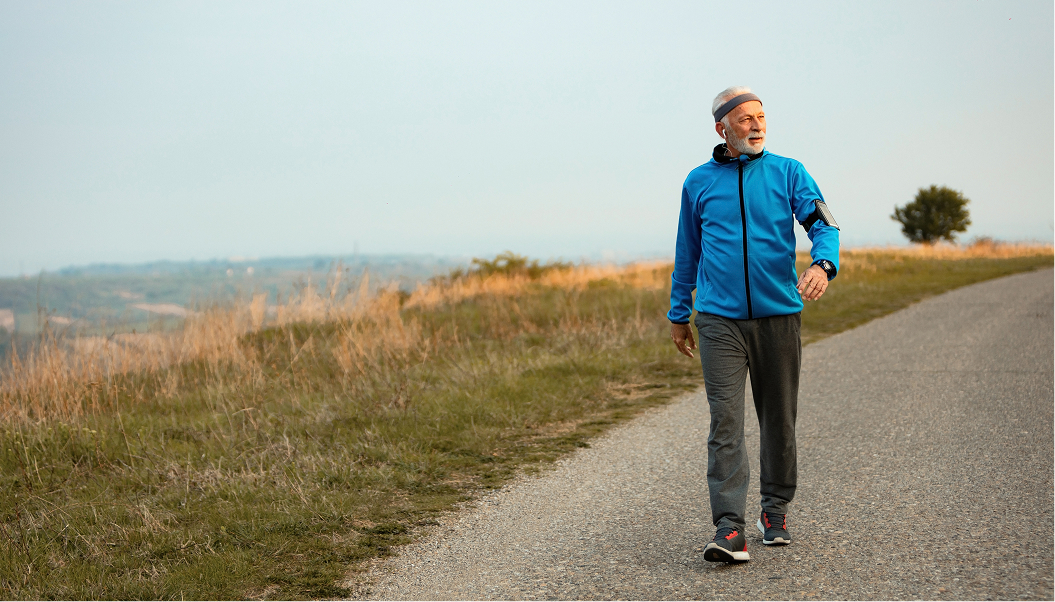
Movement does not mean a workout. Research from the University of Queensland and others has shown that even seven to ten minutes of moderate-intensity movement, a purposeful walk around the house, a short mobility sequence, or some bodyweight exercises, is sufficient to raise core body temperature by the small margin required to improve alertness and executive function. Raising core temperature is a key signal to the brain that it is time to shift from rest mode into active mode. The gym, if you use one, can come later. The morning is for the minimum effective dose.
The phone can wait twenty minutes. Everything in it was there at midnight and will still be there at seven thirty. The person who made you feel anxious last night has not resolved themselves overnight. The news cycle has not improved. The emails are essentially the same. Twenty minutes is a reasonable amount of time to be unavailable to all of that in service of arriving at the day slightly more intact.
The phone can wait twenty minutes. Everything in it was there at midnight and will still be there at seven thirty. The person who made you feel anxious last night has not resolved themselves overnight. The news cycle has not improved. The emails are essentially the same. Twenty minutes is a reasonable amount of time to be unavailable to all of that in service of arriving at the day slightly more intact.
I changed nothing else about my life. I changed only the first twenty minutes. The effect on my energy at three in the afternoon, which was previously the hour at which everything became very difficult, was noticeable within a week. That is not a controlled clinical trial. But the science underpinning it is solid, and the cost of testing it is precisely nothing.
Your wellness benefits as a member include discounts on fitness apps, sleep tracking tools, and wellbeing platforms that can support any morning routine you want to build.
WELLNESS DISCOUNTS INCLUDED IN YOUR MEMBERSHIP
Fitness, sleep and wellbeing tools are available at exclusive member rates through your membership.
Log in to your benefits hub to explore your health benefits
Your wellness benefits as a member include discounts on fitness apps, sleep tracking tools, and wellbeing platforms that can support any morning routine you want to build.
WELLNESS DISCOUNTS INCLUDED IN YOUR MEMBERSHIP
Fitness, sleep and wellbeing tools are available at exclusive member rates through your membership.
Log in to your benefits hub to explore your health benefits

Features