
The Jobs That Will Exist in Ten Years (and the Skills That Get You There)
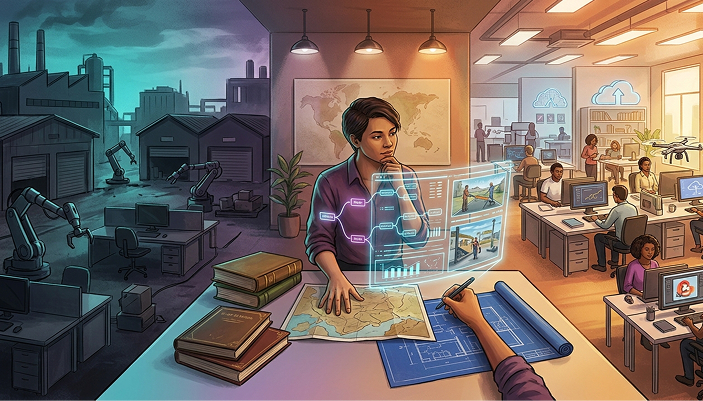
The conversation about AI and employment has settled into two unproductive camps. One insists that automation will eliminate most jobs within a generation and that the only rational response is systemic economic reform. The other insists that technology always creates as many jobs as it destroys and there is nothing to worry about. Both positions have historical evidence that partially supports them and both are too simple to be useful.
What the labour economists who study this carefully are saying is more specific and more actionable.
The skills that reliably survive automation are the ones that require the integration of knowledge across domains, and judgment in conditions of uncertainty.
What the labour economists who study this carefully are saying is more specific and more actionable.
The skills that reliably survive automation are the ones that require the integration of knowledge across domains, and judgment in conditions of uncertainty.
The jobs most at risk are those that consist primarily of routine tasks with predictable inputs and outputs. Data processing, basic legal research, first-draft content creation, standard financial analysis. These are not being eliminated tomorrow but the proportion of these tasks done by humans rather than AI tools is declining and will continue to decline.
The jobs least at risk are those requiring the kinds of capability that AI systems currently handle poorly: nuanced human judgment in uncertain situations, physical dexterity in unstructured environments, complex interpersonal negotiation and the management of novel problems that do not have established solutions. Skilled trades, clinical medicine, teaching in complex settings, engineering, social work, legal advocacy.
The jobs least at risk are those requiring the kinds of capability that AI systems currently handle poorly: nuanced human judgment in uncertain situations, physical dexterity in unstructured environments, complex interpersonal negotiation and the management of novel problems that do not have established solutions. Skilled trades, clinical medicine, teaching in complex settings, engineering, social work, legal advocacy.
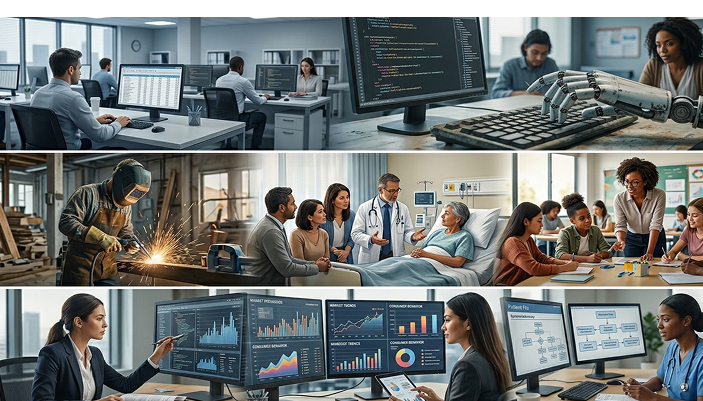
The skills that reliably survive automation are the ones that require the integration of knowledge across domains, and judgment in conditions of uncertainty. A lawyer who also understands data. A marketer who understands psychology and statistics. A nurse who can advocate for a patient within a complex institutional system. The combinations are the durable positions.
The honest advice, which the career development industry does not always give because it is not commercially convenient, is that upskilling in AI tools makes you better at whatever you currently do. Understanding how to use these tools effectively is not a threat to your role.
The honest advice, which the career development industry does not always give because it is not commercially convenient, is that upskilling in AI tools makes you better at whatever you currently do. Understanding how to use these tools effectively is not a threat to your role.
It is an enhancement of it, provided you understand what the tools cannot do, which is as important as understanding what they can.
The work of staying relevant in a changing employment market is continuous and best approached as an ongoing habit rather than an occasional crisis response.
WPP Elevate members have access to learning and development resources through the portal that support exactly this kind of continuous professional development.
The work of staying relevant in a changing employment market is continuous and best approached as an ongoing habit rather than an occasional crisis response.
WPP Elevate members have access to learning and development resources through the portal that support exactly this kind of continuous professional development.

Features