
Why Every Woman Over 35 Is Suddenly Talking About Strength Training

For a long time, the received wisdom about exercise and women went something like this: cardio for weight management, yoga for flexibility, and some light resistance work if you wanted to 'tone', a word that was doing a great deal of work while meaning almost nothing physiologically. The fitness industry was largely built around this framework, and for decades it shaped what women were offered, what they were encouraged towards, and what they were subtly steered away from.
The past five years have produced something of a correction, and it has been driven not by the fitness industry but by the research. The evidence for strength training as a health intervention for women, particularly from their mid-thirties onwards, is now comprehensive enough that several leading clinicians describe the absence of it as a clinical oversight. In 2023, a landmark report from the British Menopause Society highlighted resistance training as one of the most evidence-based interventions available to women in midlife, not as a supplement to their exercise routine, but as a primary recommendation.
Women who strength-train twice a week have measurably better bone density, metabolic health and balance outcomes in their sixties.
The mechanism most clearly supported by research is bone density. Women begin losing bone mass in their mid-thirties, a process that accelerates significantly around perimenopause and menopause as oestrogen levels decline.
The past five years have produced something of a correction, and it has been driven not by the fitness industry but by the research. The evidence for strength training as a health intervention for women, particularly from their mid-thirties onwards, is now comprehensive enough that several leading clinicians describe the absence of it as a clinical oversight. In 2023, a landmark report from the British Menopause Society highlighted resistance training as one of the most evidence-based interventions available to women in midlife, not as a supplement to their exercise routine, but as a primary recommendation.
Women who strength-train twice a week have measurably better bone density, metabolic health and balance outcomes in their sixties.
The mechanism most clearly supported by research is bone density. Women begin losing bone mass in their mid-thirties, a process that accelerates significantly around perimenopause and menopause as oestrogen levels decline.
Oestrogen plays a key role in regulating osteoblast activity, the bone-building process, and its reduction creates an environment in which bone resorption outpaces bone formation. The primary non-pharmaceutical intervention that builds and maintains bone density is mechanical loading: the kind of stress placed on the skeleton by resistance training. Studies consistently show that women who strength-train at least twice a week have measurably better bone density, metabolic health, and balance outcomes in their sixties and seventies than those who rely on cardiovascular exercise alone.
Muscle mass also matters metabolically. Skeletal muscle is the body's primary site of glucose disposal. It plays a central role in insulin sensitivity, blood sugar regulation, and resting metabolic rate. The loss of muscle mass that occurs naturally from the mid-thirties, a process called sarcopenia, is associated with increased risk of type 2 diabetes, cardiovascular disease, and functional decline in later life. A 2022 meta-analysis published in the British Journal of Sports Medicine found that resistance training two to three times per week significantly reduced the incidence of type 2 diabetes and improved glycaemic control in adults over thirty-five. This muscle loss is meaningfully slowed by consistent resistance training, and some studies suggest it can be partially reversed even in older adults.
Muscle mass also matters metabolically. Skeletal muscle is the body's primary site of glucose disposal. It plays a central role in insulin sensitivity, blood sugar regulation, and resting metabolic rate. The loss of muscle mass that occurs naturally from the mid-thirties, a process called sarcopenia, is associated with increased risk of type 2 diabetes, cardiovascular disease, and functional decline in later life. A 2022 meta-analysis published in the British Journal of Sports Medicine found that resistance training two to three times per week significantly reduced the incidence of type 2 diabetes and improved glycaemic control in adults over thirty-five. This muscle loss is meaningfully slowed by consistent resistance training, and some studies suggest it can be partially reversed even in older adults.
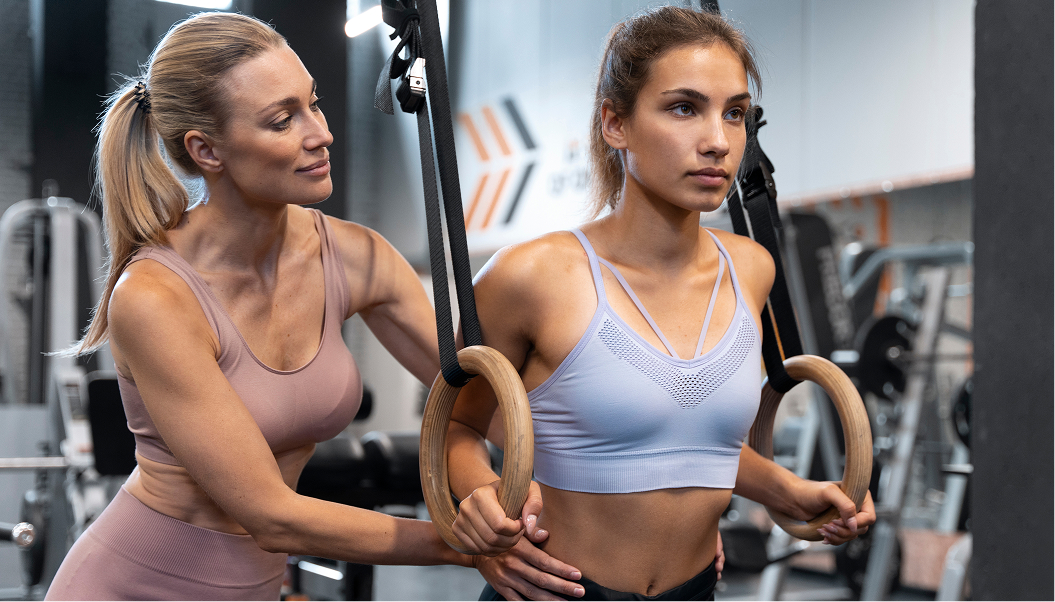
The stigma has been the barrier. The weight room has historically felt inhospitable to many women, partly by design, partly through persistent misinformation. The claim that lifting weights would make women 'bulky' is physiologically unfounded. Women have testosterone levels roughly ten to twenty times lower than men, and it is testosterone that drives the kind of hypertrophic muscle growth associated with male bodybuilders. Women who lift heavy weights become stronger, improve their body composition, and build functional capacity. They do not, without pharmaceutical assistance, develop the muscle mass of male strength athletes.
The women who have started lifting in the past few years report something beyond the physical changes. A different relationship with their bodies, one grounded in what those bodies can do rather than how they appear.
The women who have started lifting in the past few years report something beyond the physical changes. A different relationship with their bodies, one grounded in what those bodies can do rather than how they appear.
Sports psychologists note that this shift in orientation, from aesthetic motivation to functional motivation, is associated with significantly greater long-term exercise adherence. The aesthetics may have got them through the door. The strength is what keeps them coming back.
Members have access to gym membership discounts, personal training offers, and fitness app subscriptions across the UK. If strength training is something you have been considering, log in to your benefits hub to see what is available, starting is considerably more accessible than you might think.
FITNESS OFFERS FOR MEMBERS
Discounted gym memberships, personal training sessions and fitness apps are available through your membership. Log in to your benefits hub to browse fitness benefits
Members have access to gym membership discounts, personal training offers, and fitness app subscriptions across the UK. If strength training is something you have been considering, log in to your benefits hub to see what is available, starting is considerably more accessible than you might think.
FITNESS OFFERS FOR MEMBERS
Discounted gym memberships, personal training sessions and fitness apps are available through your membership. Log in to your benefits hub to browse fitness benefits

Features