
Salt of the Earth: Britain's Ancient Sea Salt Revival
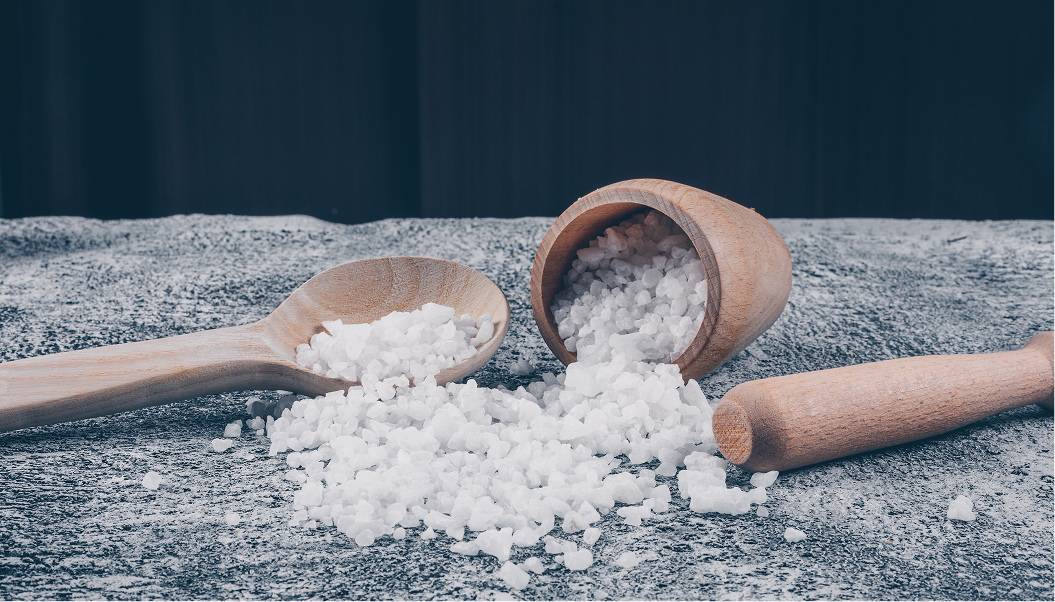
Stand at the edge of the Blackwater Estuary in Essex at low tide and you are standing inside one of England's oldest food stories. The Romans harvested salt here. The Domesday Book records it. Medieval monks depended on it. For centuries, this flat, windswept stretch of the Essex coast was one of the most productive salt-making regions in Europe. Then the industry collapsed, and the knowledge nearly vanished with it.
Nearly, but not entirely. Today, a small number of dedicated producers are reviving Britain's sea salt heritage, and what they are making is attracting the attention of chefs and food lovers far beyond these shores. British sea salt, for so long overshadowed by French fleur de sel and Himalayan pink, is finally asserting itself as a product of genuine terroir and remarkable quality.
Nearly, but not entirely. Today, a small number of dedicated producers are reviving Britain's sea salt heritage, and what they are making is attracting the attention of chefs and food lovers far beyond these shores. British sea salt, for so long overshadowed by French fleur de sel and Himalayan pink, is finally asserting itself as a product of genuine terroir and remarkable quality.
The process of harvesting sea salt is deceptively straightforward. Seawater is allowed to evaporate, either naturally through wind and sun or with the assistance of gentle heat, leaving behind crystalline deposits of sodium chloride and a complex matrix of trace minerals. The character of the resulting salt depends entirely on the character of the water from which it came, its temperature, its mineral content, its exposure to air and light.
Maldon Salt, produced on the Essex coast since 1882, remains the most recognisable British sea salt and is found on restaurant tables across the world. Its distinctive hollow pyramid flakes dissolve quickly and season with an immediacy that chefs prize. But a new generation of smaller producers is now offering alternatives that are every bit as compelling, and in some cases more so.
Maldon Salt, produced on the Essex coast since 1882, remains the most recognisable British sea salt and is found on restaurant tables across the world. Its distinctive hollow pyramid flakes dissolve quickly and season with an immediacy that chefs prize. But a new generation of smaller producers is now offering alternatives that are every bit as compelling, and in some cases more so.
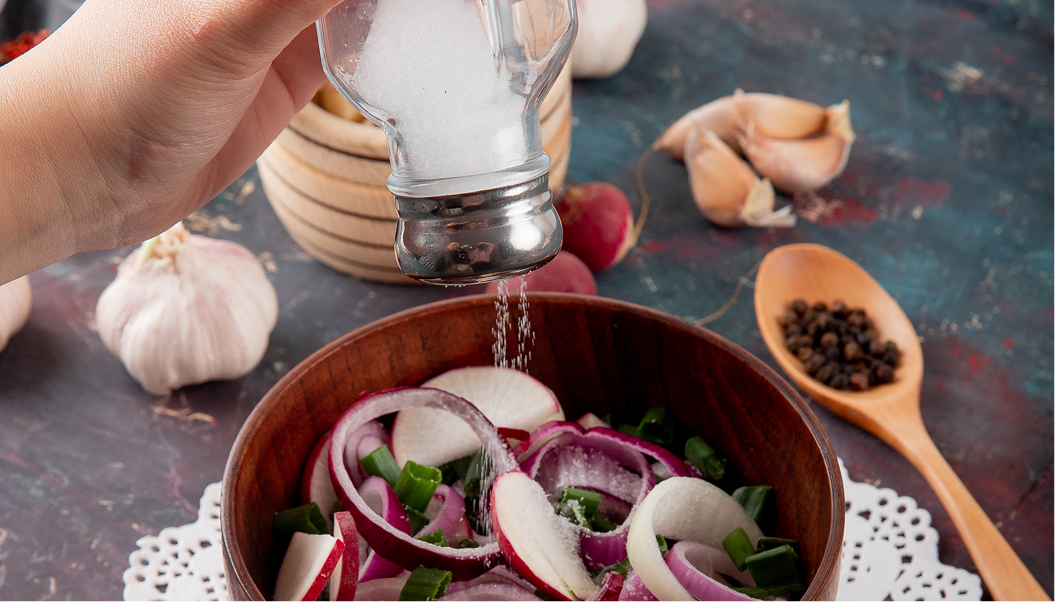
Halen Mon, based on the Isle of Anglesey in North Wales, has built a reputation for producing some of the finest sea salt in Europe. The waters of the Menai Strait, unusually clean and mineral-rich, yield a salt of extraordinary delicacy. It has been awarded Protected Designation of Origin status, the same designation that protects Champagne and Stilton, a recognition that where a food comes from is as important as how it is made.
Alongside traditional finishing salts, British producers are increasingly experimenting with smoked varieties, infusions and blended salts that bring new dimensions to the pantry. Salts smoked over whisky barrel oak, salts blended with dried seaweed or coastal herbs, salts harvested at different points in the evaporation process to yield varying crystal structures and intensities. The range of what British sea salt can be is only beginning to be explored.
Alongside traditional finishing salts, British producers are increasingly experimenting with smoked varieties, infusions and blended salts that bring new dimensions to the pantry. Salts smoked over whisky barrel oak, salts blended with dried seaweed or coastal herbs, salts harvested at different points in the evaporation process to yield varying crystal structures and intensities. The range of what British sea salt can be is only beginning to be explored.
Chefs are paying attention. At restaurants working with rigorously local ingredients, the choice of salt has become as considered as the choice of wine. A finely textured finishing salt applied at the last moment to a piece of grilled fish or a slice of dark chocolate can transform a dish in a way that no other seasoning can. Salt is not merely a flavouring. It is an amplifier, a structure-builder, a bridge between all other flavours.
Britain's salt heritage is ancient, but its future, it seems, is only beginning. The estuaries and bays that once fed a continent are quietly starting to produce again, and what they yield is worth tasting.
Britain's salt heritage is ancient, but its future, it seems, is only beginning. The estuaries and bays that once fed a continent are quietly starting to produce again, and what they yield is worth tasting.