
Teenagers and Sleep: Why Your Teen Really Can't Get Up in the Morning (And What to Do About It)
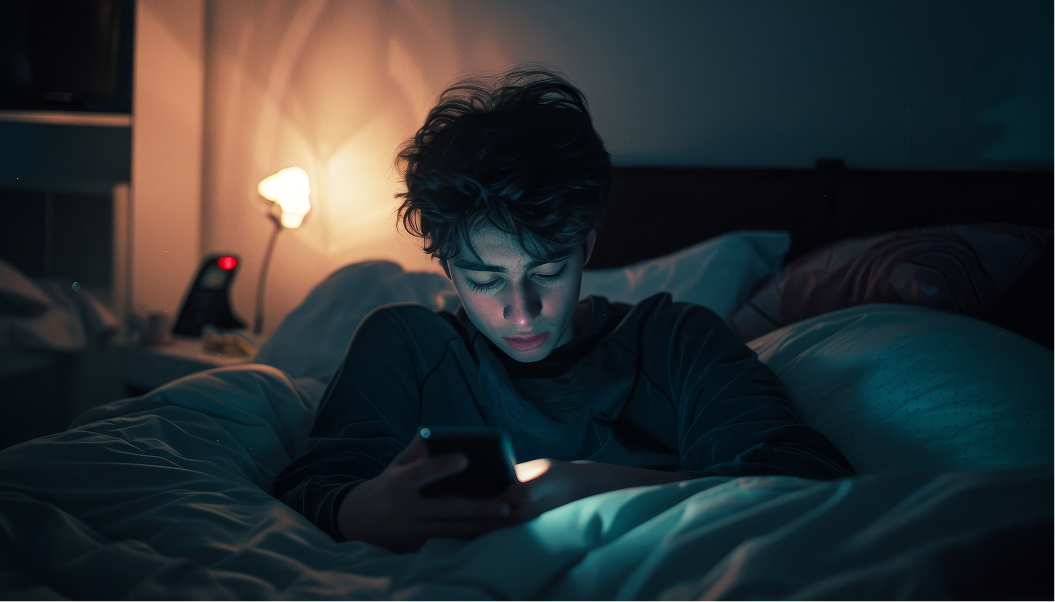
The battle over teenager sleep is one of the most universal and most exhausting conflicts in family life. The teenager who cannot be roused before noon at weekends, who stays up until two in the morning and then struggles to function before ten the next day, who seems constitutionally incapable of the early rising that school demands: this is a source of daily friction in millions of British households. It also, it turns out, has a genuine biological explanation that most parents are not fully aware of.
Adolescence produces a real, measurable shift in the body's circadian rhythm, the internal clock that governs sleep and wakefulness. During puberty, the timing of melatonin release shifts significantly later, typically by one to three hours. This is not a choice, a character flaw or a social habit. It is a physiological change driven by the hormonal cascade of adolescence. A teenager whose melatonin rises at midnight rather than nine or ten in the evening is not being difficult by finding it impossible to fall asleep earlier. Their brain is genuinely not producing the sleep hormone that makes sleep possible.
Adolescence produces a real, measurable shift in the body's circadian rhythm, the internal clock that governs sleep and wakefulness. During puberty, the timing of melatonin release shifts significantly later, typically by one to three hours. This is not a choice, a character flaw or a social habit. It is a physiological change driven by the hormonal cascade of adolescence. A teenager whose melatonin rises at midnight rather than nine or ten in the evening is not being difficult by finding it impossible to fall asleep earlier. Their brain is genuinely not producing the sleep hormone that makes sleep possible.
The consequences of this biological shift colliding with standard school start times are significant. Most secondary schools in the UK begin between eight and nine in the morning. For a teenager with a delayed circadian rhythm, this is the equivalent of asking an adult to perform demanding cognitive work at four in the morning. The neuroscience of adolescent sleep deprivation is unambiguous: it impairs memory consolidation, emotional regulation, decision-making and academic performance. It also increases risk-taking behaviour and is associated with elevated rates of anxiety and depression.
Several UK schools have experimented with later start times and the results have been consistently positive. Attendance improves, academic performance improves, student wellbeing improves and even teacher reports of classroom behaviour improve. The evidence base for later secondary school start times is now substantial, though systemic change is slow.
Several UK schools have experimented with later start times and the results have been consistently positive. Attendance improves, academic performance improves, student wellbeing improves and even teacher reports of classroom behaviour improve. The evidence base for later secondary school start times is now substantial, though systemic change is slow.
In the meantime, there are practical steps families can take. The single most impactful intervention is removing screens from the bedroom at night. Blue light from phones and tablets delays melatonin release further, compounding the already late circadian shift of adolescence. A teenager who checks their phone until midnight is not just making a choice to stay up late: they are actively suppressing the biological signal that would allow them to fall asleep. A charging station outside the bedroom is the most evidence-backed sleep intervention available to parents.
Consistent wake times, even at weekends, help anchor the circadian rhythm and prevent the dramatic social jet lag that occurs when a teenager sleeps until noon on Saturday and Sunday. The gap between weekday and weekend wake times is a key driver of Monday morning misery.
Understanding the biology does not make the morning struggle disappear, but it does change the quality of the conversation. Your teenager is not lazy. Their brain is doing something genuinely unusual, and they need support rather than judgement to navigate it.
Understanding the biology does not make the morning struggle disappear, but it does change the quality of the conversation. Your teenager is not lazy. Their brain is doing something genuinely unusual, and they need support rather than judgement to navigate it.