Why the Five-Year Plan Is Dead and What Successful People Do Instead
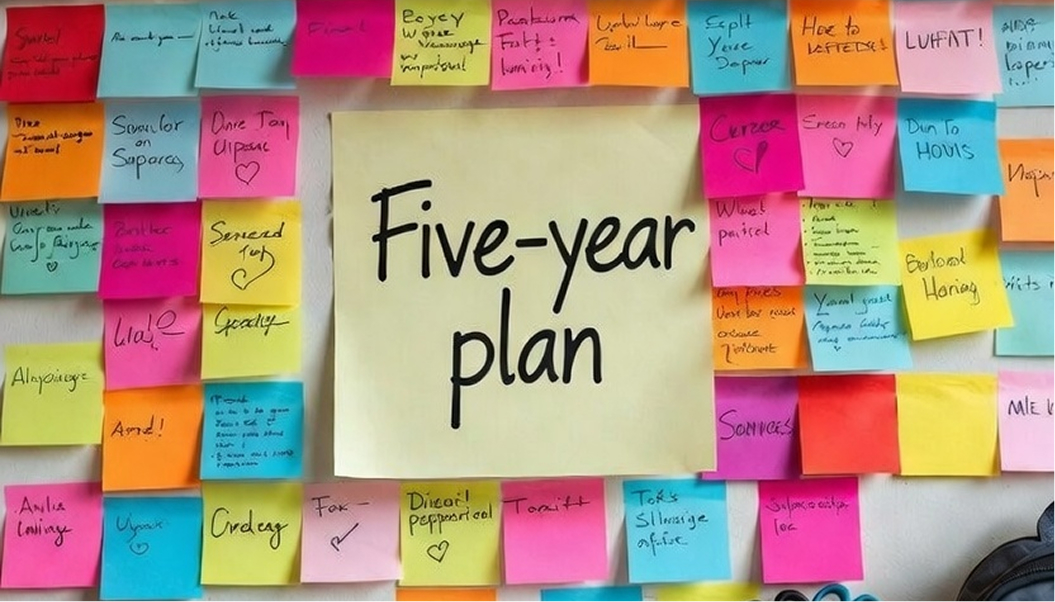
The five-year plan was a cornerstone of career and life advice for generations. Sit down, think carefully about where you want to be in five years, map out the steps to get there and then execute with disciplined consistency. It was logical, it was structured and it reflected a world in which careers followed predictable paths, industries remained stable and the future was, broadly speaking, a slightly more developed version of the present.
That world no longer exists, and the five-year plan has not survived the transition.
Consider what has changed in any given five-year window recently. Entire industries have been disrupted or transformed beyond recognition. AI has altered the skills market more rapidly than any previous technological shift.
That world no longer exists, and the five-year plan has not survived the transition.
Consider what has changed in any given five-year window recently. Entire industries have been disrupted or transformed beyond recognition. AI has altered the skills market more rapidly than any previous technological shift.
The pandemic rewired the geography and culture of work permanently. Economic volatility has made long-range financial planning considerably more uncertain. In a landscape this dynamic, a rigid five-year plan is not a roadmap. It is a liability, encouraging you to optimise for a destination that may have ceased to exist by the time you arrive.
The people navigating this environment most successfully are not abandoning planning altogether. They are replacing long-range rigid plans with something more sophisticated: a combination of clear values-based direction, short-horizon goals and what strategists call optionality, the deliberate cultivation of skills, relationships and opportunities that keep multiple futures available rather than locking in a single path.
The people navigating this environment most successfully are not abandoning planning altogether. They are replacing long-range rigid plans with something more sophisticated: a combination of clear values-based direction, short-horizon goals and what strategists call optionality, the deliberate cultivation of skills, relationships and opportunities that keep multiple futures available rather than locking in a single path.

Values-based direction asks a different question from the traditional five-year plan. Rather than asking where do you want to be, it asks what kind of work and life matters to you. What do you want more of? What are you not willing to compromise on? What would you regret not having tried? These questions produce a compass rather than a map, which is precisely what a volatile landscape requires.
Short-horizon goals, typically focused on the next three to twelve months rather than five years, are more responsive to real conditions. They can be adjusted as circumstances change without requiring a wholesale revision of your entire life strategy. They also produce faster feedback loops, allowing you to learn what is and is not working while the stakes are still manageable.
Short-horizon goals, typically focused on the next three to twelve months rather than five years, are more responsive to real conditions. They can be adjusted as circumstances change without requiring a wholesale revision of your entire life strategy. They also produce faster feedback loops, allowing you to learn what is and is not working while the stakes are still manageable.
Optionality, the third element, involves a deliberate investment in skills, relationships and experiences that are broadly useful across multiple possible futures rather than narrowly optimised for a single predicted outcome. Learning to communicate well, building a diverse professional network, developing financial literacy, staying curious about emerging fields: these compound in value regardless of which direction the world turns next.
The five-year plan promised certainty in an uncertain world. The people who are thriving in 2026 have made peace with uncertainty and built the agility to work with it. That is not the abandonment of ambition. It is its most sophisticated expression.
The five-year plan promised certainty in an uncertain world. The people who are thriving in 2026 have made peace with uncertainty and built the agility to work with it. That is not the abandonment of ambition. It is its most sophisticated expression.