Why Everyone Suddenly Cares About Their Sleep Score
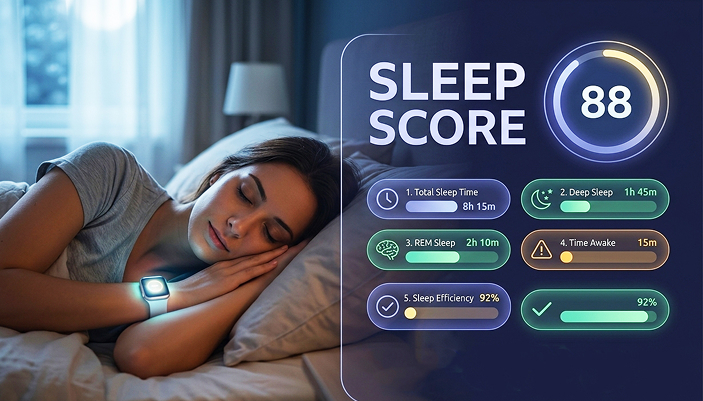
Rings, watches and apps now grade your night before you've had your coffee. Is this the start of actually sleeping better, or just a new thing to worry about.
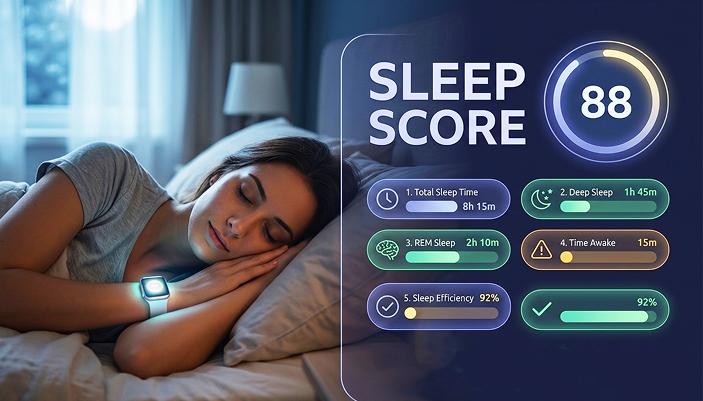
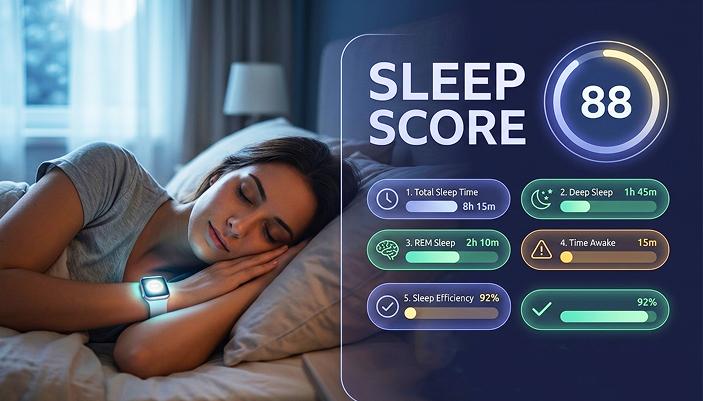
There's a particular kind of modern smugness that comes from waking up, glancing at your wrist or your phone, and seeing a sleep score in the 90s. There's an equally particular kind of dread that comes from seeing a 61. Either way, you knew how you felt before you looked. Now you also know a number, and somehow the number matters more.
Sleep tracking used to be a niche interest for athletes and the chronically curious. Now it's mainstream enough that ‘what did you score last night’ is a genuine conversation starter, somewhere between talking about the weather and talking about your commute. Oura rings, Whoop bands, Garmin and Fitbit watches, Apple's own sleep app, all of them quietly turned a thing humans have done forever into something with a leaderboard. Whoop even has an actual leaderboard, letting you compare your recovery score against friends, which is either motivating or faintly horrifying depending on your morning.
Sleep tracking used to be a niche interest for athletes and the chronically curious. Now it's mainstream enough that ‘what did you score last night’ is a genuine conversation starter, somewhere between talking about the weather and talking about your commute. Oura rings, Whoop bands, Garmin and Fitbit watches, Apple's own sleep app, all of them quietly turned a thing humans have done forever into something with a leaderboard. Whoop even has an actual leaderboard, letting you compare your recovery score against friends, which is either motivating or faintly horrifying depending on your morning.
What they're actually measuring is genuinely interesting. Most rely on a mix of heart rate variability, movement, skin temperature and blood oxygen to estimate which sleep stage you're in at any given point, then bundle it into a single, friendly number. None of them can see your brainwaves the way a clinical sleep lab can, so the scores are an estimate dressed up as a measurement. They're often a decent estimate. They are not gospel.
That distinction matters because of what happens next, which is that people start treating the score as the goal rather than the rest itself. There's a term for this now: orthosomnia, coined by sleep researchers at Northwestern after they noticed patients arriving with sleep tracker data insisting something was wrong with them, despite feeling perfectly fine.
That distinction matters because of what happens next, which is that people start treating the score as the goal rather than the rest itself. There's a term for this now: orthosomnia, coined by sleep researchers at Northwestern after they noticed patients arriving with sleep tracker data insisting something was wrong with them, despite feeling perfectly fine.
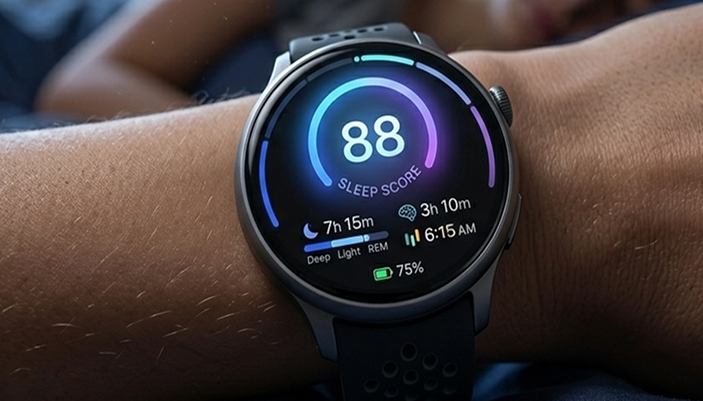
A tool built to help you worry less about sleep has, for a meaningful number of people, become the exact thing keeping them up.
It's a familiar pattern if you've watched any quantified habit go mainstream. Step counts did something similar a decade ago, turning a walk into a number that needed hitting rather than a walk. Calorie tracking has done it for longer and more damagingly. Sleep was always going to be next, partly because the technology finally got good enough, and partly because we're a culture that's decided rest needs to be optimised rather than simply had.
It's a familiar pattern if you've watched any quantified habit go mainstream. Step counts did something similar a decade ago, turning a walk into a number that needed hitting rather than a walk. Calorie tracking has done it for longer and more damagingly. Sleep was always going to be next, partly because the technology finally got good enough, and partly because we're a culture that's decided rest needs to be optimised rather than simply had.
None of this means the trackers are a bad idea. For a lot of people, seeing the data has been genuinely useful, a gentle nudge to cut the last coffee earlier or notice that three glasses of wine on a Tuesday wrecks Wednesday more than they'd admitted to themselves. The information is real and often actionable. The trick seems to be holding it loosely, treating the score as one data point among several, alongside how you actually feel, rather than as a verdict handed down each morning by a small piece of plastic on your finger.
The best use of a sleep score might honestly be the most boring one: glance at it, notice any big swings, and then get on with your day regardless of the number. Anyone whose mood for the whole morning depends on what a ring decided about their REM cycle at 3am has, in a small way, missed the point of the thing they bought.
The best use of a sleep score might honestly be the most boring one: glance at it, notice any big swings, and then get on with your day regardless of the number. Anyone whose mood for the whole morning depends on what a ring decided about their REM cycle at 3am has, in a small way, missed the point of the thing they bought.

Features